

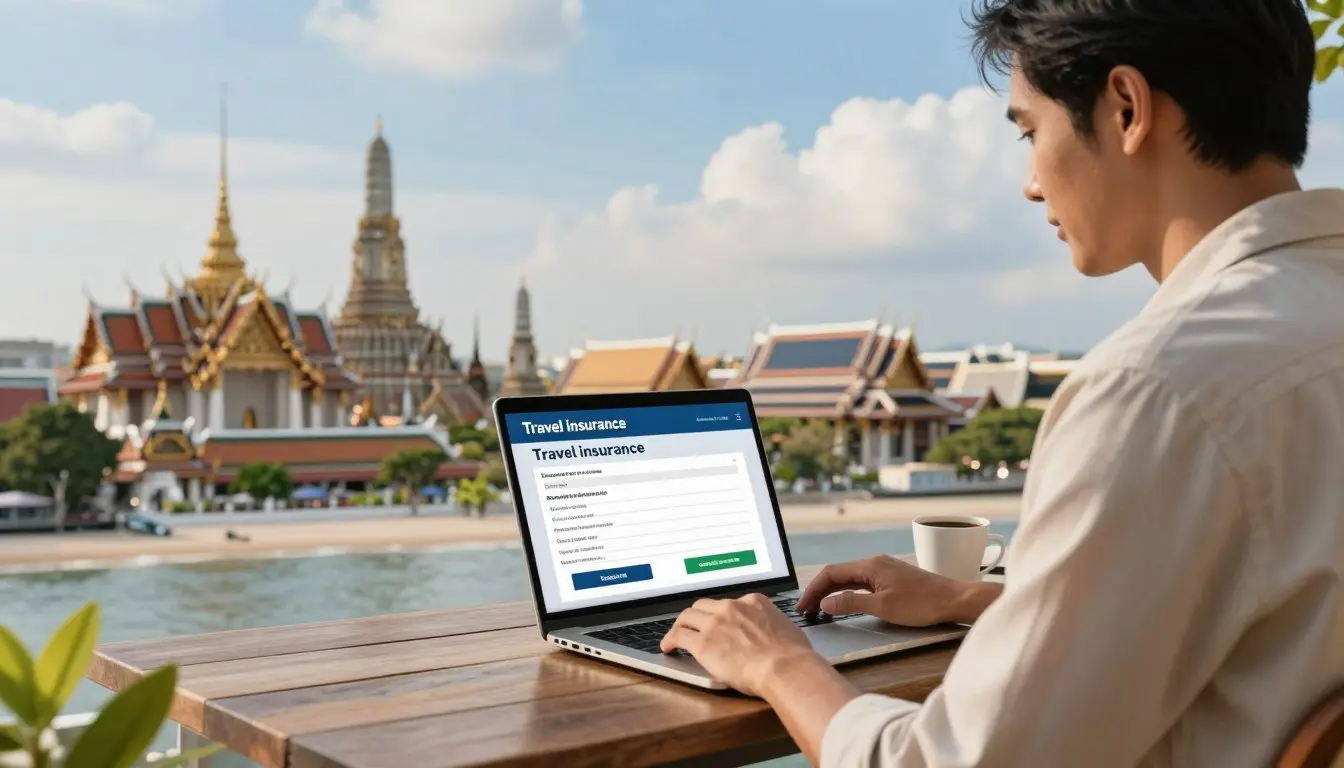
A single night in a Bangkok hospital can cost over $3,000. That’s before any actual treatment begins. Most visitors to Thailand don’t realize their U.S. health coverage won’t help them 8,000 miles from home.
Thai medical facilities typically require cash payments upfront. You’ll handle reimbursement paperwork later.
The State Department warns American travelers about domestic health plans. These plans rarely provide benefits abroad. Without proper protection, you’re financially exposed to emergency room visits and unexpected trip cancellations.
Thailand welcomes U.S. citizens with visa-free stays of 30-60 days. Travel insurance isn’t legally required, but you shouldn’t skip it.
Floods, political demonstrations, and medical emergencies happen more often than expected. Comprehensive travel insurance Thailand plans act as your financial safety net. They protect both your wallet and peace of mind during your adventure.
Key Takeaways
- Thai hospitals demand cash payments upfront before providing medical care
- U.S.-based health plans typically don’t cover expenses incurred overseas
- A single hospital stay can cost thousands of dollars out of pocket
- Protection plans cover medical emergencies, trip cancellations, and lost belongings
- Coverage isn’t legally mandatory but provides essential financial protection
- Unexpected events like floods or protests can disrupt your plans without warning
Why Thailand Isn’t the Place to Skip Travel Insurance
Skipping travel insurance for Thailand might seem like a smart way to save money. That decision could cost you thousands when something goes wrong far from home. The country’s traffic patterns, adventure tourism, and tropical health risks make protection essential.
Thailand welcomes millions of visitors each year. Most return home with nothing but great memories. But the statistics tell a sobering story that doesn’t match the paradise imagery.
What Actually Happens When Things Go Wrong
Real travelers face real problems in Thailand with measurable frequency. In 2022, Thailand recorded 939,713 road accidents across the country. Tourists aren’t exempt—they’re often right in the middle on rental scooters navigating unfamiliar roads.
According to Bangkok Post data, 83 tourists died in Thailand during 2016 alone. Road accidents, swimming incidents, and boating mishaps accounted for half of those fatalities. These represent documented patterns that continue year after year.
Beyond fatal incidents, thousands more travelers deal with non-life-threatening emergencies. These still require immediate medical attention:
- Motorbike accidents requiring stitches, X-rays, or fracture treatment
- Severe food poisoning or waterborne illness needing IV fluids and monitoring
- Dengue fever symptoms requiring hospitalization and blood testing
- Jellyfish stings or coral cuts that become infected in tropical conditions
- Dehydration and heat exhaustion during temple tours or beach activities
Property crimes add another layer of problems. The State Department lists bag snatching, pickpocketing, and non-violent robbery as common issues. Rental scams are widespread, particularly for apartments and vacation properties.
Losing your passport, credit cards, and phone creates serious problems. You face embassy visits, emergency documentation fees, and account access challenges. A medical emergency Thailand situation becomes exponentially harder when you’ve also lost your wallet.
The Real Cost of Medical Care in Thai Hospitals
Thailand’s medical facilities range from excellent private hospitals to basic clinics. The quality of care at top facilities matches or exceeds Western standards. The billing practices, however, work very differently than what most Americans expect.
Many medical treatment providers in Thailand operate on a cash-first basis. Your U.S. health insurance card carries no weight at the registration desk. Most Thai medical facilities want payment before treatment or immediately upon discharge.
Thailand hospital costs at private facilities break down like this:
- Emergency room visit and initial assessment: $500-$1,000
- Surgery for broken bones or serious injuries: $5,000-$15,000
- Hospitalization for dengue, severe food poisoning, or infections: $2,000-$5,000
- Intensive care unit stays: $1,500-$3,000 per day
- Ambulance transport within cities: $100-$300
These emergency room costs Thailand facilities charge represent out-of-pocket expenses you’ll pay upfront. A seemingly minor motorbike accident requiring overnight observation could easily reach $3,000-$4,000.
The cash payment hospitals Thailand model means you need actual funds available immediately. Credit cards work at major facilities, but you’re still paying the full amount yourself. Your U.S. health insurance abroad provides zero coverage in the moment.
Public hospitals offer lower costs but often face language barriers and longer wait times. Even there, foreigners typically pay higher rates than Thai nationals. A public hospital emergency visit might cost $200-$400.
Consider this scenario: You rent a scooter to explore Chiang Mai’s mountain roads. A dog runs into traffic, you swerve, and you slide across the pavement. You’re conscious but bleeding, with a possibly broken wrist.
The ambulance takes you to a private hospital. Before treatment, the registration desk estimates $4,500 for X-rays, setting the fracture, and overnight observation. They need a credit card or cash deposit before the doctor sees you.
Without travel insurance, that $4,500 comes directly from your vacation budget or emergency savings. With proper coverage, you contact your insurance provider and they coordinate with the hospital. Your out-of-pocket cost might be a $100-$250 deductible.
Medical emergency Thailand expenses don’t stop at hospital bills. You might need to extend your hotel stay during recovery. You may need to change your flight home or pay for someone to assist you.
The “I’ll be careful” approach doesn’t protect you from drunk drivers or contaminated street food. You can’t control every variable in a foreign country. What you can control is whether you’re financially prepared.
Medical Coverage: Your Most Important Protection
Your health insurance back home won’t follow you to Thailand. That’s where travel medical insurance Thailand steps in. Most domestic U.S. health plans provide zero coverage once you leave the country.
If you get sick or injured abroad, you’re paying out of pocket. You need medical evacuation insurance specifically designed for international travel. This isn’t optional protection.
It’s the foundation everything else builds on. Medical coverage does the heavy lifting during emergencies. It reimburses you for treatments that would otherwise drain your savings in hours.
Emergency Treatment and Hospital Stays
Emergency medical coverage Thailand policies pay for a wide range of situations. You’re covered for doctor visits, emergency room treatment, and hospital admission. Coverage also includes surgery and medications administered at medical facilities.
Here’s what qualifies as an emergency: it’s broader than you think. Severe dehydration from food poisoning counts. An infected cut that needs antibiotics and monitoring qualifies.
A motorcycle accident requiring stitches and X-rays definitely falls under emergency care. Your policy covers the initial treatment plus necessary follow-up appointments. If you fracture your ankle and need three follow-up visits, those appointments are included.
Hospital stays trigger the highest expenses. A private room in a Bangkok hospital costs $200-500 per night before any treatment. Add surgery, specialists, medications, and diagnostic tests—bills climb quickly into five figures.
Medical Evacuation: When You Need to Get Home
Medical evacuation sounds dramatic, but specific scenarios make it absolutely necessary. If you’re diving in Koh Tao and develop decompression sickness, local clinics can’t help. You need immediate transport to a hyperbaric chamber in Bangkok or the United States.
Emergency evacuation coverage arranges and pays for this transport. You get a medical flight with trained staff on board. Ground ambulance service and coordination between facilities are included.
The evacuation coverage cost without insurance ranges from $50,000 to over $100,000. Distance and medical complexity determine the final price. A helicopter evacuation from a remote island to Bangkok alone can hit $25,000.
An air ambulance from Thailand back to the U.S. easily exceeds six figures. Your policy handles severe illness in rural areas requiring specialized care unavailable locally. It covers serious injuries needing immediate transport to better-equipped hospitals.
Conditions requiring you to continue recovery at home under your regular doctors are covered. Evacuation also covers repatriation if the worst happens. Your policy pays to return you home for continued care or final arrangements.
The Right Coverage Amount for Thailand
How much medical insurance limits Thailand travelers actually need depends on several factors. Most experts recommend $100,000 as the absolute minimum. Coverage of $250,000 provides comfortable protection for most travelers.
That range feels excessive until you look at real scenarios. A serious motorcycle accident requiring surgery, ICU stay, and rehabilitation generates $80,000-150,000 in bills. Appendicitis requiring emergency surgery runs $15,000-25,000.
A heart attack with cardiac care and evacuation home can exceed $200,000. Consider these guidelines when choosing your coverage level:
- Short trips (1-2 weeks): $100,000 minimum coverage provides basic protection for healthy adults under 50
- Extended stays (3+ weeks): $150,000-250,000 reduces risk exposure over longer periods
- Adventure activities: $250,000+ recommended if you’re diving, motorbiking, or doing higher-risk activities
- Travelers over 60: $250,000 minimum due to increased health risks
- Pre-existing conditions: Maximum available coverage (often $500,000) provides crucial protection
Higher limits cost surprisingly little extra. The difference between $100,000 and $250,000 coverage often adds just $20-40 to your premium. Don’t focus only on the maximum limit.
Check the sub-limits for specific situations. Some policies cap emergency room visits at $1,000 or limit ambulance service to $500. These restrictions could leave you with significant out-of-pocket costs.
Dental Emergencies and Prescription Medications
A Thailand dental emergency happens more often than you’d expect. You bite into something hard and crack a tooth. An infection flares up and causes unbearable pain.
A filling falls out and exposes the nerve. Many travel insurance policies include emergency dental coverage, but limits typically range from $500 to $1,000. That covers urgent pain relief, temporary fixes, and treatment for injuries.
It won’t cover routine cleanings or cosmetic procedures. Emergency dental means pain relief and functional restoration. An abscess requiring drainage and antibiotics qualifies.
A knocked-out tooth from an accident gets covered. A cavity that starts hurting doesn’t—unless it develops into an acute infection. Prescription medication coverage handles two scenarios: medications administered during your treatment at hospitals or clinics.
It also covers emergency prescriptions you need immediately. Lost your asthma inhaler and need a replacement? That’s covered up to your policy limit.
Most policies cover emergency prescriptions up to $500-1,000. Keep your receipts and get documentation from the pharmacy. Show what you purchased and why you needed it.
| Coverage Type | Basic Protection | Standard Coverage | Comprehensive Plan |
|---|---|---|---|
| Emergency Medical Treatment | $50,000 | $100,000 | $250,000+ |
| Medical Evacuation | $50,000 | $250,000 | $500,000+ |
| Emergency Dental | $300 | $500 | $1,000 |
| Prescription Medications | Included in medical | $500 separate limit | $1,000 separate limit |
| Best For | Budget travelers, short trips | Most travelers | Extended stays, seniors, adventure activities |
The medical portion of your travel insurance carries the entire weight of your financial protection abroad. Everything else—trip cancellation, baggage coverage, travel delays—matters far less. Making sure you can afford emergency medical care is crucial.
Choose your medical limits carefully. This is where you protect yourself from bankruptcy-level expenses. A single accident or illness can create devastating financial consequences.
What Else Your Travel Insurance for Thailand Should Cover
Your Thailand trip involves significant upfront costs. Protecting that financial investment matters as much as covering medical emergencies. Beyond hospital bills, you face real risks to money already spent on flights and hotels.
You also need to protect belongings you’re carrying through busy markets and crowded beaches. These protections work as your financial safety net when plans fall apart. They’re practical coverage for situations that happen to travelers every single day.
Trip Cancellation and Cutting Your Trip Short
Trip cancellation insurance Thailand policies refund your pre-paid, non-refundable expenses. This happens when you can’t travel due to covered reasons. You’ve booked $3,000 in flights and hotels, then your father gets hospitalized two days before departure.
Standard cancellation coverage refunds those expenses. Covered reasons typically include serious illness or injury. Death in the immediate family, jury duty, and natural disasters also qualify.
Military deployment is another covered reason. These policies protect money you’ve already spent, not hypothetical future expenses.
Trip interruption insurance works differently—it kicks in after your trip has started. Say you’re five days into a two-week Thailand vacation. A family emergency calls you home.
This coverage pays for your unused hotel nights. It also covers the expensive last-minute flight back to the United States.

Standard policies require specific, documented reasons for cancellation or interruption. But cancel for any reason coverage Thailand options give you flexibility. You can bail out without providing documentation—even if you simply don’t feel comfortable traveling anymore.
The trade-off: CFAR coverage typically reimburses 50-75% of your insured costs instead of 100%. You usually need to cancel at least 48 hours before departure. It also costs more—expect to pay an additional 40-60% above your base policy premium.
| Coverage Type | Reimbursement Rate | Reason Required | Cost Premium |
|---|---|---|---|
| Standard Cancellation | 100% of covered costs | Must meet specific criteria | Baseline policy rate |
| Cancel for Any Reason | 50-75% of insured costs | No documentation needed | 40-60% higher premium |
| Trip Interruption | 100% unused + return transport | Must meet specific criteria | Included in most policies |
Lost Baggage and Stolen Belongings
Thailand’s crowded markets, beach areas, and tourist zones create plenty of opportunities for theft. Baggage loss coverage protects you in two distinct situations. These include when your luggage doesn’t arrive with you and when someone steals your belongings.
Baggage delay coverage activates when the airline loses your luggage temporarily. You’re stuck in Bangkok wearing yesterday’s clothes with no toiletries or medications. This coverage reimburses you for purchasing essential items—typically $100-300.
You won’t have to live in the same outfit for three days. Most policies require your baggage to be delayed 12-24 hours before coverage kicks in. Keep your receipts for everything you buy during the delay period.
Permanent loss or theft works differently. If your bag never shows up, the policy reimburses you up to stated limits. Someone steals your backpack containing your laptop and camera—often $1,000-2,500 per person gets covered.
You’ll need to file a police report. Provide proof of ownership and value.
Important reality check: policies pay depreciated value, not replacement cost. That two-year-old camera gets valued at its current used market price. Electronics typically depreciate 20-30% per year in insurance calculations.
High-value items often have sub-limits. Your policy might cover $2,500 total baggage loss but only $500 per individual item. Check these limits carefully if you’re traveling with expensive camera gear or jewelry.
Flight Delays and Missed Connections
Flight delay reimbursement covers your expenses when flights get significantly delayed. But “significantly” means longer than you’d think. Most policies require delays of 6-12 hours before coverage activates, depending on the specific terms.
Once you cross that threshold, the policy reimburses reasonable expenses. This includes meals, hotel accommodation if the delay extends overnight, and ground transportation. You’re getting reimbursed for actual money you had to spend.
Thailand’s monsoon season, mechanical issues, and occasionally chaotic aviation schedules mean delays happen frequently. Having this coverage prevents a six-hour airport delay from draining your wallet. You won’t overpay for airport meals and emergency hotel bookings.
Missed connection coverage applies when a delay causes you to miss your next flight. Your domestic flight from Chiang Mai arrives late and you miss your international connection in Bangkok. This coverage pays for rebooking and any additional accommodation needed.
The key requirement: both flights usually need to be on the same ticket reservation. You might not be covered if you booked separate tickets on different airlines. This applies when the first delay causes you to miss the second flight.
Travel delay coverage typically maxes out at $500-1,500 total. Daily limits run $100-200. These aren’t huge numbers, but they prevent delays from becoming financial emergencies on top of logistical headaches.
Thailand-Specific Situations Your Policy Needs to Handle
Thailand’s unique travel landscape creates insurance gaps that catch unprepared visitors off-guard. The activities that make Thailand unforgettable often aren’t covered by standard travel insurance. Zipping through islands on a rented scooter, diving in crystal-clear waters, and exploring during monsoon season can all be excluded.
Understanding these Thailand-specific situations before you leave home protects you from costly surprises. You won’t be stuck arguing with claims adjusters after something goes wrong.
Most travelers assume their basic policy covers everything they’ll do in Thailand. That assumption costs people thousands of dollars every year.
Motorbike Rentals and Scooter Accidents
Renting a scooter feels like the perfect way to explore Thai islands and countryside. It’s cheap, convenient, and gives you freedom to discover hidden beaches and temples. But motorcycle insurance Thailand coverage is where most standard travel policies draw a hard line.
Here’s the reality: many travel medical policies completely exclude motorized two-wheeled vehicles. Others only provide scooter accident coverage if you hold a valid motorcycle license from your home country. A regular driver’s license often isn’t enough.
If you crash without the proper license or appropriate motorbike rental insurance Thailand protection, you pay every medical bill yourself. Road accidents account for the majority of deaths among foreign visitors in Thailand. Rental scooters are poorly maintained more often than you’d expect.
The scams add another layer of risk. Rental companies sometimes claim you damaged the bike and demand hundreds or thousands of dollars on the spot. Some even orchestrate theft of their own vehicles and then charge renters for the “stolen” scooter.
What you need to know before renting:
- Check if your policy covers motorized two-wheelers or categorizes them as adventure activities requiring additional coverage
- Verify whether you need an international driving permit with motorcycle endorsement
- Take dated photos and videos of the rental bike from all angles before you ride away
- Confirm your policy includes liability coverage for property damage to other vehicles
- Always wear a helmet, even if it’s not enforced—claims can be denied if you weren’t wearing proper safety equipment
Many specialized adventure sports insurance Thailand policies include scooter coverage automatically. Adding this rider to your standard policy costs less than a single emergency room visit.
Diving, Snorkeling, and Adventure Activities
Thailand’s underwater world attracts divers and snorkelers from around the globe. The problem is that standard travel insurance often labels these as “hazardous activities” and excludes them entirely.
You need specific diving insurance Thailand coverage if you’re planning to explore coral reefs. Even recreational snorkeling can require adventure sports insurance Thailand depending on how your policy is written.
The risks are real. Riptides along Thailand’s coasts claim lives every year, particularly in areas without lifeguards. Jellyfish stings from box jellyfish and Portuguese man o’ war have caused fatalities on several islands. Diving schools don’t always adhere to international safety standards, and equipment maintenance varies widely.
Adventure activities that typically require additional coverage:
- Scuba diving at any depth
- Snorkeling in open water or remote locations
- Zip-lining through jungle canopies
- Rock climbing and bouldering
- White-water rafting
- ATV and quad bike tours
Read your policy’s definition of “hazardous activities” carefully. Some insurers exclude anything beyond walking and swimming in hotel pools. Others provide coverage up to certain depths for diving or include common adventure activities in their base plans.
If you’re doing any adventure activities, look for policies that specifically state they’re covered. Don’t assume silence in the policy means approval. Exclusions matter more than inclusions when you file a claim.
Monsoons, Floods, and Weather Disruptions
Thailand experiences distinct monsoon seasons that vary by region. The southwest monsoon affects the Andaman coast from May through October. The northeast monsoon hits the Gulf coast from October through December. Heavy rains cause flooding in both northern and southern Thailand regularly.
Monsoon travel insurance becomes essential during these periods. Floods can wash out roads, cancel flights, and force evacuations. If you’re trapped in a flooded area or need to evacuate early, you’ll want trip interruption coverage.
Thailand weather coverage should include several key protections:
- Trip interruption benefits if you must cut your vacation short due to weather emergencies
- Travel delay coverage for cancelled or postponed flights caused by storms
- Additional accommodation expenses if you’re stranded longer than planned
- Emergency evacuation if flooding or storms make your location unsafe
Standard policies often exclude weather events that were “known” or “foreseeable” at the time you purchased insurance. Buying your policy well in advance protects you better than waiting until monsoon forecasts appear. Ideally, purchase coverage when you book your trip.
Weather-related claims require documentation. Save flight cancellation notices, hotel receipts for extended stays, and any official evacuation orders. These documents prove your claim when you file for reimbursement.
Border Runs and Visa Extension Issues
Many travelers do border runs for visa extensions or overstay their permitted time accidentally. Travel insurance won’t cover visa denial, overstay fines, or legal issues from immigration violations. That’s your responsibility.
However, certain situations might trigger trip interruption benefits. If borders close unexpectedly due to political unrest or government restrictions, some comprehensive policies provide coverage. You may receive help with extended accommodation and rebooking fees if you can’t leave Thailand as planned.
Political protests are possible during election periods. While demonstrations in Bangkok and other cities rarely affect tourists directly, they can disrupt transportation. They may also close airports temporarily.
What travel insurance typically covers related to border issues:
- Unexpected border closures due to political instability or natural disasters
- Additional accommodation if you’re prevented from leaving the country through no fault of your own
- Rebooking fees for flights cancelled due to civil unrest affecting airports
What insurance doesn’t cover:
- Visa overstays or denial of visa extensions
- Legal fees for immigration violations
- Fines or penalties for breaking visa rules
- Voluntary decision to stay longer than your visa allows
Keep copies of your visa stamps, entry dates, and any visa extension paperwork. If you’re legitimately prevented from leaving Thailand due to circumstances beyond your control, this documentation supports your claim. This evidence is crucial for trip interruption claims.
The key is understanding that insurance protects you from unexpected events, not planned risks or rule-breaking. If you’re doing regular border runs for visa purposes, you’re traveling without the safety net insurance provides.
How to Pick the Right Policy Without Overpaying
Shopping for travel insurance feels overwhelming because companies don’t make it easy. Once you understand what matters, you can find solid coverage without breaking the bank. The secret is reading three specific parts of every policy and matching them to your situation.
Travel insurance typically costs between 4-10% of your total trip expenses. A $3,000 Thailand trip might run you $120-$300 in insurance costs. This depends on your age, coverage level, and trip length.
The question isn’t whether you can afford insurance. It’s whether you’re getting the right protection for what you’re paying.
Reading What’s Actually Excluded
Every insurance policy has an exclusions section that lists situations where they won’t pay. This fine print matters more than the glossy marketing promises. Travel insurance exclusions determine when your coverage actually works—and when you’re on your own.
Most policies exclude motorcycle and scooter accidents unless you purchase additional coverage. If you’re planning to rent a motorbike in Chiang Mai or Phuket, this matters. This exclusion alone could leave you with a $20,000 hospital bill.
- Alcohol-related incidents: Injuries sustained while intoxicated typically aren’t covered
- High-risk activities: Rock climbing, bungee jumping, or Muay Thai fighting may require adventure sports riders
- Civil unrest and political protests: Medical care resulting from demonstrations or riots often excluded
- Pregnancy-related issues: Many policies exclude complications after a certain week of pregnancy
- Mental health crises: Some insurers exclude psychiatric care or limit coverage significantly
- Undeclared pre-existing conditions: Any medical issue you didn’t disclose when purchasing won’t be covered
Some policies also exclude coverage for laptops, expensive cameras, or jewelry. If you’re traveling with valuable electronics, check whether they’re protected. You might need separate coverage.
The same principle applies when researching travel insurance for other destinations. Exclusions vary by insurer and destination.
Understanding Deductibles and Claim Limits
Your deductible is the amount you pay out of pocket before insurance kicks in. A policy with a $250 deductible means you handle the first $250 yourself. After that, insurance covers the rest up to your claim limits travel insurance policy maximum.
Lower deductibles sound appealing, but they come with higher premium costs. A $0 deductible policy might cost $100 more than one with a $250 deductible. Calculate whether paying extra upfront makes sense for your budget and risk tolerance.
| Medical Bill Amount | Your Deductible | You Pay | Insurance Pays |
|---|---|---|---|
| $800 clinic visit | $250 | $250 | $550 |
| $3,500 ER treatment | $250 | $250 | $3,250 |
| $15,000 surgery | $250 | $250 | $14,750 |
| $200 prescription | $250 | $200 | $0 (below deductible) |
Policy deductibles Thailand travelers should consider typically range from $0 to $500. The sweet spot for most people is $100-$250. This keeps premiums reasonable while limiting your out-of-pocket exposure.
Claim limits are equally important. These are the maximum amounts your policy pays for different categories. A policy might offer $50,000 for medical emergencies, $1,500 for lost baggage, and $500 for delays.
If your medical bill hits $75,000, you’re responsible for the remaining $25,000. Match your coverage limits to realistic risks.
A $10,000 medical limit might work for minor issues. Serious injuries or illnesses can easily exceed that amount. For Thailand, aim for at least $50,000 in medical coverage—and $100,000 if you’re over 60.
Pre-Existing Conditions and Age Restrictions
Standard travel insurance policies often exclude coverage for pre-existing medical conditions. If you have diabetes, asthma, or heart disease, claims related to those conditions might be denied. This creates a significant gap in protection for many travelers.
The good news: many insurers offer pre-existing conditions coverage through special waivers. These waivers typically require you to purchase insurance within 14-21 days of your first trip payment. You’ll also need to be medically able to travel when you buy the policy.
Specifically ask whether pre-existing condition waivers are available and what they cost. Some policies include this coverage automatically, while others charge extra. The additional cost is usually worth it if you have ongoing medical issues.
Age restrictions affect both pricing and coverage availability. Many insurers charge significantly higher premiums once you turn 65 or 70. Some policies reduce maximum coverage limits for older travelers or exclude certain benefits entirely.
If you’re over 60, don’t assume you’re stuck with whatever policy accepts you. Shop around specifically for insurers that specialize in coverage for older travelers. These companies understand your needs better and often provide more comprehensive protection without excessive premium increases.
Credit cards sometimes offer trip cancellation insurance if you use them to book travel. However, this coverage is usually limited and may not include medical protection. Check your card benefits before assuming you’re covered—you’ll likely still need a standalone policy.
Your home health insurance might provide some international coverage, but don’t rely on it. Most domestic plans offer minimal overseas benefits, and navigating claims from Thailand can be complicated. The best travel insurance Thailand travelers can buy is a dedicated travel medical policy.
Remember that filing deadlines matter. Most insurers require you to report claims within a specific timeframe after the covered event. Missing these deadlines can result in denied claims, even when you have valid coverage.
Getting Covered Before You Board Your Flight
The travel insurance timeline matters less than you might think. Prices don’t increase as your departure date gets closer. The risk stays the same, so your cost stays the same.
Your purchase timing depends on what benefits you want. Cancel for Any Reason coverage requires buying Thailand travel insurance within 14-21 days of your first trip payment. Pre-existing condition waivers follow the same window.
Miss that deadline, and these options disappear. However, you can still get basic coverage right up until departure.
Need coverage at the last minute? You can buy protection right up until departure—even the day before your flight. The policy activates immediately after purchase.
Purchasing Thailand travel insurance takes about 15 minutes online. Have your trip dates ready, traveler ages, destination details, and total trip cost. Include everything non-refundable: flights, hotels, tours, rental cars.
Choose between comprehensive trip protection, medical-only coverage, or annual plans if you travel frequently. Match your choice to Thailand-specific risks.
Getting insurance before departure takes less time than researching restaurants or packing your bags. The cost runs between 4-10% of your trip total. That small upfront expense lets you explore Thai beaches, temples, and night markets worry-free.
Frequently Asked Questions About Thailand Travel Insurance
Does Thailand legally require travel insurance to enter the country?
How much does travel insurance for Thailand typically cost?
Will my regular health insurance cover me in Thailand?
What medical coverage amount do I actually need for Thailand?
Does travel insurance cover motorbike accidents in Thailand?
What happens if I need to cancel my trip before I leave?
Are diving and adventure activities covered by standard travel insurance?
What should I do if I need medical care in Thailand?
Does travel insurance cover lost or stolen belongings?
Frequently Asked Questions About Thailand Travel Insurance
Does Thailand legally require travel insurance to enter the country?
No, Thailand doesn’t legally require travel insurance for most tourist visitors. However, skipping it could cost you dearly. Thai hospitals typically require cash payment upfront for all services.
Your U.S. health insurance likely won’t cover you abroad. Without travel insurance, you’re personally responsible for paying every dollar of medical bills. Even minor emergencies can reach thousands of dollars.
Think of insurance as your financial safety net. Thailand doesn’t demand it, but your wallet definitely needs it.
How much does travel insurance for Thailand typically cost?
Travel insurance for Thailand generally costs 4-10% of your total trip cost. Your age, coverage limits, and selected benefits affect the price. For example, a ,000 trip typically costs 0-300 for comprehensive coverage.
Younger travelers with basic coverage pay less. Older travelers or those adding Cancel for Any Reason benefits pay more. Compare what you’re paying against what you’d lose without coverage.
A 0 policy looks reasonable against a potential ,000 hospital bill.
Will my regular health insurance cover me in Thailand?
Probably not. Most U.S. health insurance plans don’t provide coverage outside the country. Medicare offers extremely limited international benefits.
Even if your plan covers “emergency care abroad,” Thai hospitals won’t bill your insurance directly. You’ll need to pay cash upfront and submit claims for reimbursement later. Many domestic insurers deny or delay these claims.
Travel medical insurance bridges this gap by covering you immediately. It handles direct payment to facilities. You won’t drain your savings at the hospital registration desk.
What medical coverage amount do I actually need for Thailand?
Most experts recommend 0,000-250,000 in medical coverage for Thailand. Serious accidents or illnesses generate six-figure bills quickly. A motorbike accident requiring surgery could cost ,000-20,000.
Medical evacuation from a remote island to Bangkok can reach ,000-100,000. If you’re over 60, have pre-existing conditions, or plan risky activities, choose higher coverage. Younger, healthy travelers doing low-risk activities usually need 0,000-150,000.
Does travel insurance cover motorbike accidents in Thailand?
It depends—this catches many travelers off-guard. Many standard policies exclude motorized two-wheeled vehicles entirely. Some only cover you with a valid motorcycle license from your home country.
Crash a rented scooter without proper licensing? You’re paying every medical bill yourself. Before renting that motorbike, check your policy’s exact wording on motorized vehicles.
Some insurers offer adventure sports riders that include motorcycle coverage. You must add this before you depart.
What happens if I need to cancel my trip before I leave?
Trip cancellation coverage reimburses your non-refundable expenses for covered reasons. These typically include serious illness, death in the family, or natural disasters. Jury duty also qualifies as a covered reason.
Spent ,000 on flights and hotels? Your father gets hospitalized two days before departure? Cancellation insurance refunds that ,000.
Standard policies only cover specific reasons listed in the policy. Want flexibility to cancel for any reason? You need Cancel for Any Reason (CFAR) coverage. This typically refunds 50-75% and must be purchased within 14-21 days.
Are diving and adventure activities covered by standard travel insurance?
Not automatically. Standard policies often exclude “hazardous activities” like scuba diving and zip-lining. Rock climbing and sometimes even deep snorkeling get excluded too.
Planning to dive in Koh Tao or go jungle trekking? You need to add adventure sports coverage to your policy. Diving accidents happen regularly in Thailand.
Check your policy’s activity list before assuming you’re covered. Add the appropriate rider for anything beyond beach lounging and temple visits.
What should I do if I need medical care in Thailand?
First, contact your insurance provider’s 24/7 emergency assistance line immediately. The number should be on your insurance card and policy documents. They’ll direct you to appropriate facilities and arrange direct billing.
In a true emergency? Go directly to the nearest hospital. Notify your insurer as soon as possible afterward.
Keep all receipts, medical reports, and documentation for claims. Many Thai private hospitals have international patient coordinators who understand insurance processes.
Does travel insurance cover lost or stolen belongings?
Yes, most comprehensive policies include baggage coverage for lost, stolen, or damaged belongings. This typically covers
Frequently Asked Questions About Thailand Travel Insurance
Does Thailand legally require travel insurance to enter the country?
No, Thailand doesn’t legally require travel insurance for most tourist visitors. However, skipping it could cost you dearly. Thai hospitals typically require cash payment upfront for all services.
Your U.S. health insurance likely won’t cover you abroad. Without travel insurance, you’re personally responsible for paying every dollar of medical bills. Even minor emergencies can reach thousands of dollars.
Think of insurance as your financial safety net. Thailand doesn’t demand it, but your wallet definitely needs it.
How much does travel insurance for Thailand typically cost?
Travel insurance for Thailand generally costs 4-10% of your total trip cost. Your age, coverage limits, and selected benefits affect the price. For example, a $3,000 trip typically costs $120-300 for comprehensive coverage.
Younger travelers with basic coverage pay less. Older travelers or those adding Cancel for Any Reason benefits pay more. Compare what you’re paying against what you’d lose without coverage.
A $200 policy looks reasonable against a potential $10,000 hospital bill.
Will my regular health insurance cover me in Thailand?
Probably not. Most U.S. health insurance plans don’t provide coverage outside the country. Medicare offers extremely limited international benefits.
Even if your plan covers “emergency care abroad,” Thai hospitals won’t bill your insurance directly. You’ll need to pay cash upfront and submit claims for reimbursement later. Many domestic insurers deny or delay these claims.
Travel medical insurance bridges this gap by covering you immediately. It handles direct payment to facilities. You won’t drain your savings at the hospital registration desk.
What medical coverage amount do I actually need for Thailand?
Most experts recommend $100,000-250,000 in medical coverage for Thailand. Serious accidents or illnesses generate six-figure bills quickly. A motorbike accident requiring surgery could cost $10,000-20,000.
Medical evacuation from a remote island to Bangkok can reach $50,000-100,000. If you’re over 60, have pre-existing conditions, or plan risky activities, choose higher coverage. Younger, healthy travelers doing low-risk activities usually need $100,000-150,000.
Does travel insurance cover motorbike accidents in Thailand?
It depends—this catches many travelers off-guard. Many standard policies exclude motorized two-wheeled vehicles entirely. Some only cover you with a valid motorcycle license from your home country.
Crash a rented scooter without proper licensing? You’re paying every medical bill yourself. Before renting that motorbike, check your policy’s exact wording on motorized vehicles.
Some insurers offer adventure sports riders that include motorcycle coverage. You must add this before you depart.
What happens if I need to cancel my trip before I leave?
Trip cancellation coverage reimburses your non-refundable expenses for covered reasons. These typically include serious illness, death in the family, or natural disasters. Jury duty also qualifies as a covered reason.
Spent $4,000 on flights and hotels? Your father gets hospitalized two days before departure? Cancellation insurance refunds that $4,000.
Standard policies only cover specific reasons listed in the policy. Want flexibility to cancel for any reason? You need Cancel for Any Reason (CFAR) coverage. This typically refunds 50-75% and must be purchased within 14-21 days.
Are diving and adventure activities covered by standard travel insurance?
Not automatically. Standard policies often exclude “hazardous activities” like scuba diving and zip-lining. Rock climbing and sometimes even deep snorkeling get excluded too.
Planning to dive in Koh Tao or go jungle trekking? You need to add adventure sports coverage to your policy. Diving accidents happen regularly in Thailand.
Check your policy’s activity list before assuming you’re covered. Add the appropriate rider for anything beyond beach lounging and temple visits.
What should I do if I need medical care in Thailand?
First, contact your insurance provider’s 24/7 emergency assistance line immediately. The number should be on your insurance card and policy documents. They’ll direct you to appropriate facilities and arrange direct billing.
In a true emergency? Go directly to the nearest hospital. Notify your insurer as soon as possible afterward.
Keep all receipts, medical reports, and documentation for claims. Many Thai private hospitals have international patient coordinators who understand insurance processes.
Does travel insurance cover lost or stolen belongings?
Yes, most comprehensive policies include baggage coverage for lost, stolen, or damaged belongings. This typically covers $1,000-2,500 per person. High-value items like laptops and cameras often have sublimits of $300-500 per item.
Backpack stolen with your passport, phone, and credit cards? This coverage reimburses you for replacing those items. Baggage delay coverage pays for essential purchases after 12-24 hours.
Coverage limits might not replace everything if you’re traveling with expensive electronics or jewelry.
When should I buy travel insurance for my Thailand trip?
The sooner, the better—ideally within 14-21 days of making your first trip payment. This timeline unlocks time-sensitive benefits like Cancel for Any Reason coverage. It also provides pre-existing condition waivers.
Insurance prices don’t increase as your departure date approaches. You can even buy coverage the day before departure. However, you’ll miss those early-purchase benefits.
The purchasing process takes 10-15 minutes online. You’ll get immediate proof of coverage to download.
What’s the difference between trip cancellation and trip interruption coverage?
Trip cancellation protects you if you need to cancel before you leave. It reimburses non-refundable expenses for covered reasons. Trip interruption covers you after your trip has started.
Need to return home early due to a family emergency? It reimburses unused hotel nights and pays for expensive last-minute flights. A hurricane forces you to evacuate Thailand early? Interruption coverage handles those costs.
Most comprehensive policies include both protections. You need coverage for problems that happen before and during your trip.
Are pre-existing medical conditions covered by travel insurance?
Standard policies typically exclude pre-existing conditions like diabetes, asthma, or heart disease. Problems related to those conditions might not be covered. However, many insurers offer pre-existing condition waivers that eliminate these exclusions.
Requirements usually include purchasing insurance within 14-21 days of your first trip payment. You must insure the full cost of your trip. You also need to be medically able to travel when buying the policy.
Have pre-existing conditions? Look specifically for policies offering this waiver and buy early to qualify.
Does travel insurance cover flight delays in Thailand?
Yes, most comprehensive policies include travel delay coverage. This activates after your flight is delayed 6-12 hours depending on the policy. Coverage reimburses meals, hotel rooms, and ground transportation while you wait.
Thailand has monsoon season, mechanical issues, and occasionally chaotic flight schedules. Delays happen more regularly than you’d expect. Bangkok to Phuket flight gets cancelled and you’re stuck overnight?
This coverage pays for the hotel and meals. You won’t be sleeping on the airport floor at your own expense.
Can I purchase travel insurance after I’ve already left for Thailand?
Technically some insurers allow you to purchase coverage after departure. However, this severely limits your benefits and isn’t recommended. You won’t get trip cancellation coverage since you’ve already left.
You might face waiting periods before medical coverage activates. Some benefits won’t apply at all. Something goes wrong before you purchase insurance?
That incident won’t be covered. Always buy travel insurance before you leave home. Purchase well before departure to maximize your protection and access time-sensitive benefits.
What documentation do I need to file a travel insurance claim?
You’ll need receipts for all expenses you’re claiming. Medical reports and bills are required for medical claims. Police reports are necessary for theft or criminal incidents.
Get documentation of flight delays or cancellations from the airline. Keep your original trip receipts showing what you paid. For medical claims, get itemized bills from hospitals showing exact treatments and costs.
Take photos of damaged belongings for baggage claims. The more documentation you provide, the faster your claim gets processed. Keep both physical and digital copies of everything.
,000-2,500 per person. High-value items like laptops and cameras often have sublimits of 0-500 per item.
Backpack stolen with your passport, phone, and credit cards? This coverage reimburses you for replacing those items. Baggage delay coverage pays for essential purchases after 12-24 hours.
Coverage limits might not replace everything if you’re traveling with expensive electronics or jewelry.
When should I buy travel insurance for my Thailand trip?
The sooner, the better—ideally within 14-21 days of making your first trip payment. This timeline unlocks time-sensitive benefits like Cancel for Any Reason coverage. It also provides pre-existing condition waivers.
Insurance prices don’t increase as your departure date approaches. You can even buy coverage the day before departure. However, you’ll miss those early-purchase benefits.
The purchasing process takes 10-15 minutes online. You’ll get immediate proof of coverage to download.
What’s the difference between trip cancellation and trip interruption coverage?
Trip cancellation protects you if you need to cancel before you leave. It reimburses non-refundable expenses for covered reasons. Trip interruption covers you after your trip has started.
Need to return home early due to a family emergency? It reimburses unused hotel nights and pays for expensive last-minute flights. A hurricane forces you to evacuate Thailand early? Interruption coverage handles those costs.
Most comprehensive policies include both protections. You need coverage for problems that happen before and during your trip.
Are pre-existing medical conditions covered by travel insurance?
Standard policies typically exclude pre-existing conditions like diabetes, asthma, or heart disease. Problems related to those conditions might not be covered. However, many insurers offer pre-existing condition waivers that eliminate these exclusions.
Requirements usually include purchasing insurance within 14-21 days of your first trip payment. You must insure the full cost of your trip. You also need to be medically able to travel when buying the policy.
Have pre-existing conditions? Look specifically for policies offering this waiver and buy early to qualify.
Does travel insurance cover flight delays in Thailand?
Yes, most comprehensive policies include travel delay coverage. This activates after your flight is delayed 6-12 hours depending on the policy. Coverage reimburses meals, hotel rooms, and ground transportation while you wait.
Thailand has monsoon season, mechanical issues, and occasionally chaotic flight schedules. Delays happen more regularly than you’d expect. Bangkok to Phuket flight gets cancelled and you’re stuck overnight?
This coverage pays for the hotel and meals. You won’t be sleeping on the airport floor at your own expense.
Can I purchase travel insurance after I’ve already left for Thailand?
Technically some insurers allow you to purchase coverage after departure. However, this severely limits your benefits and isn’t recommended. You won’t get trip cancellation coverage since you’ve already left.
You might face waiting periods before medical coverage activates. Some benefits won’t apply at all. Something goes wrong before you purchase insurance?
That incident won’t be covered. Always buy travel insurance before you leave home. Purchase well before departure to maximize your protection and access time-sensitive benefits.
What documentation do I need to file a travel insurance claim?
You’ll need receipts for all expenses you’re claiming. Medical reports and bills are required for medical claims. Police reports are necessary for theft or criminal incidents.
Get documentation of flight delays or cancellations from the airline. Keep your original trip receipts showing what you paid. For medical claims, get itemized bills from hospitals showing exact treatments and costs.
Take photos of damaged belongings for baggage claims. The more documentation you provide, the faster your claim gets processed. Keep both physical and digital copies of everything.