

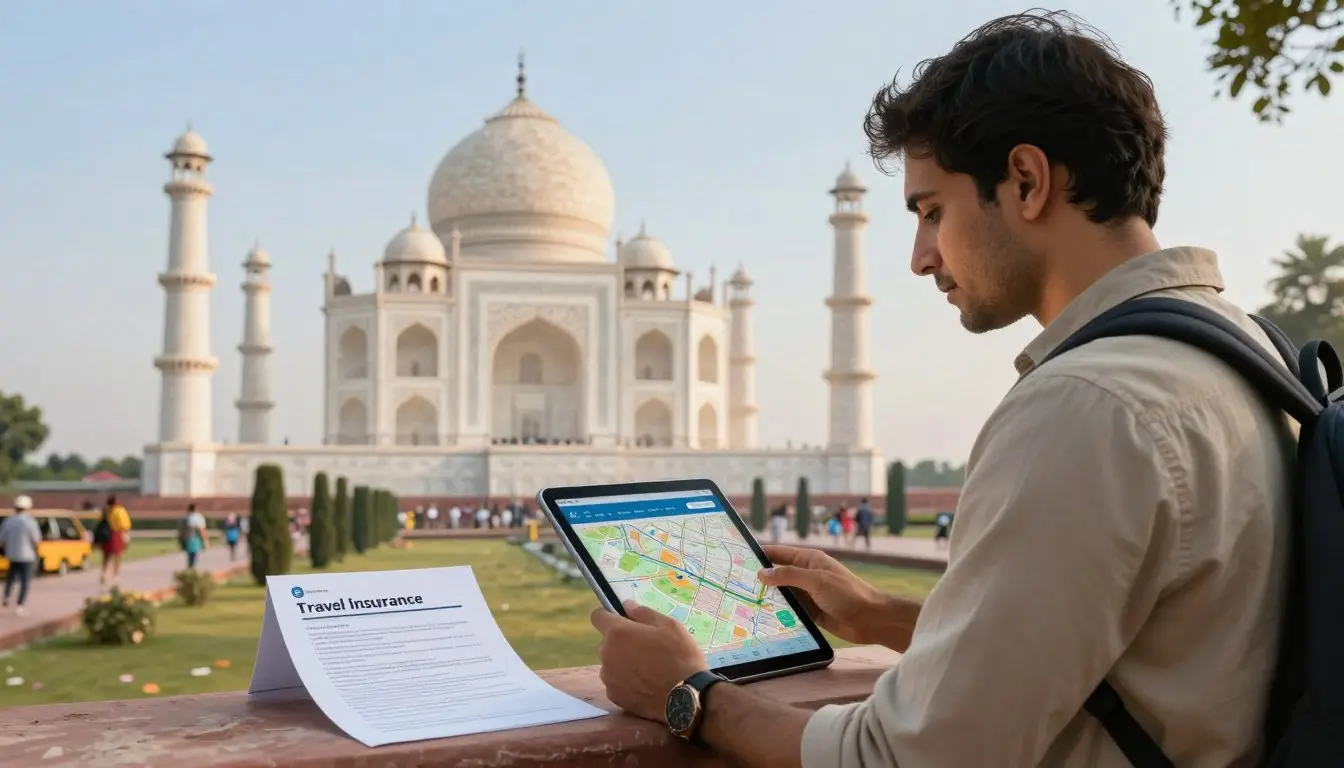
Every year, over 1.5 million Americans visit India. Nearly 30% experience some form of medical issue during their trip. That’s roughly one in three visitors dealing with unexpected health situations.
Medical costs and quality vary dramatically from city to city in India. Infrastructure changes completely depending on where you go. Street food might upset your stomach.
Traffic accidents happen frequently on crowded roads. Monsoon season delays flights regularly. India isn’t your typical vacation destination.
That’s where travel insurance for India becomes your practical safety net. You’re not buying it because something will definitely go wrong. You’re getting it because reliable backup makes all the difference.
The right travel medical insurance protects both your wallet and your peace of mind. It lets you focus on experiencing incredible culture and landscapes. Minor inconveniences shouldn’t become major financial burdens.
Key Takeaways
- Nearly one in three American visitors to India experiences medical issues during their trip
- Medical care quality and costs vary dramatically between Indian cities and rural areas
- Road safety conditions and traffic accidents present higher risks than many Western countries
- Coverage protects against unexpected expenses from health issues, flight delays, and travel disruptions
- The right policy serves as a financial safety net without creating travel anxiety
- Proper planning allows you to focus on experiencing India’s culture rather than worrying about emergencies
Why India Requires Special Insurance Planning
India’s complexity demands tailored coverage. The country operates differently than most Western destinations. Understanding these differences helps you choose appropriate protection.
This isn’t about avoiding India. It’s about realistic preparation that matches what you’ll actually encounter.
Standard travel insurance policies often fall short. They’re designed for predictable European or Caribbean trips. India insurance requirements need to account for situations you won’t face elsewhere.
The gap between expectation and reality can be expensive. Proper coverage protects you from unexpected costs.
Healthcare Quality Varies Dramatically by Location
India’s medical infrastructure presents a unique challenge. Major cities like Delhi, Mumbai, and Bangalore have world-class hospitals. These facilities offer cutting-edge treatments and English-speaking staff.
But venture beyond metropolitan areas and the picture changes completely. Smaller cities and rural regions may have limited medical facilities. Basic equipment might be all that’s available.
If you get seriously ill while trekking in rural Himachal Pradesh, evacuation becomes necessary. You might need transport to a major city. Sometimes evacuation back home is required.
Medical coverage India policies should address several common health issues travelers face:
- Stomach bugs from street food and contaminated water
- Heat exhaustion in tropical and desert regions
- Respiratory problems from urban air pollution
- Injuries from uneven sidewalks and chaotic traffic
- Vaccine-preventable diseases like hepatitis A and typhoid
These aren’t rare emergencies. They happen to careful travelers every day. Your policy should cover the reality that even cautious eaters can get sick.
Medical expenses abroad can escalate quickly. Treatment or evacuation becomes necessary without warning.
Transportation and Weather Create Predictable Problems
Travel disruptions in India aren’t occasional inconveniences. They’re part of the landscape. Flight delays spike during monsoon season from June through September.
Heavy rains ground planes and flood roads regularly. These weather patterns happen during monsoon months.
Train travel presents its own challenges. Poor maintenance contributes to occasional accidents and frequent cancellations. Road conditions vary wildly across the country.
Aggressive driving and infrastructure gaps make journeys longer. Travel becomes less predictable than expected.
Political demonstrations and strikes can shut down entire cities. These organized protests are known as bandhs or hartals. They disrupt all transportation and may leave you stranded.
Your insurance should account for these predictable unpredictabilities. Coverage for extra hotel nights matters more here than elsewhere. Trip interruption protection becomes essential rather than optional.
Some regions face periodic security concerns. These can affect travel plans unexpectedly. Checking current advisories before your trip helps.
Having insurance that covers sudden itinerary changes gives you flexibility. You can adapt when situations develop unexpectedly.
The goal isn’t to paint India as dangerous. Millions of travelers visit safely and have incredible experiences. But proper medical coverage India planning lets you handle bumps without financial stress.
Medical Coverage: Your Most Critical Protection
Your health represents your most valuable asset on your India journey. Medical emergencies abroad can drain your savings faster than any other travel mishap. Understanding what comprehensive travel insurance covers should be your first priority.
The difference between adequate and inadequate medical protection shows itself in moments of crisis. You need coverage that responds when you’re most vulnerable.
Emergency Medical Treatment and Hospitalization
Picture this: you’re exploring Delhi’s bustling markets when severe food poisoning strikes. Within hours, you’re dehydrated and need emergency hospitalization. The private hospital admits you, starts IV fluids, runs tests, and keeps you overnight.
Even in India, where healthcare costs less than in America, this incident could generate a $5,000 to $15,000 bill. Without insurance, you’re paying that out of pocket in a foreign currency while you’re sick.
Quality medical coverage handles all these essential services:
- Emergency room visits and urgent care consultations
- Hospital room charges and nursing care
- Diagnostic tests including blood work, X-rays, and scans
- Surgical procedures and anesthesia if needed
- Prescription medications administered during treatment
- Follow-up doctor visits related to the emergency
The coverage limits matter significantly. Most policies for India offer between $100,000 and $1,000,000 in medical coverage. For a standard trip, $250,000 provides solid protection.
If you’re older than 65 or have health concerns, consider the higher limits.
Cashless treatment arrangements make a real difference when you’re unwell. The insurance company pays the hospital directly rather than requiring you to pay upfront. You simply present your insurance card, and approved treatment proceeds without you handling money.
Not every hospital in India participates in cashless networks. Your policy documents will list preferred facilities in major cities like Mumbai, Delhi, Bangalore, and Chennai.
Medical Evacuation and Repatriation
Standard medical coverage handles treatment at local facilities. But what happens when local facilities can’t provide adequate care for your condition?
Consider this real-world situation: you’re trekking in Ladakh at 14,000 feet when severe altitude sickness hits. You need immediate descent and oxygen therapy. The nearest hospital with proper equipment sits in Leh, requiring helicopter evacuation from your remote location.
That helicopter flight alone costs $10,000 or more. Your basic medical coverage doesn’t include this extraordinary transportation expense. That’s where emergency medical evacuation becomes essential.
Emergency medical evacuation covers transportation to the nearest adequate medical facility when:
- Local hospitals lack necessary equipment or specialists
- Your condition requires transfer to a larger city
- You’re in a remote area without accessible medical care
- Emergency transport by helicopter or air ambulance is medically necessary
Repatriation takes this protection further. If your condition requires treatment back home in America, your policy covers medical transport home. This could cost $50,000 to $100,000 for an air ambulance with medical staff.
These evacuation benefits typically come standard with comprehensive travel insurance. Always verify the specific coverage limits. Look for policies offering at least $500,000 in evacuation coverage.
The decision to evacuate isn’t yours alone to make. The insurance company’s medical team reviews your case and consults with treating physicians. They determine if evacuation is medically necessary.
Pre-Existing Condition Considerations
If you have diabetes, heart disease, asthma, or any ongoing health condition, standard policies present a challenge. Most travel insurance automatically excludes pre-existing conditions coverage unless you take specific steps.
A pre-existing condition means any illness or medical condition that existed before you purchased your policy. Insurers define this differently, but most look back 60 to 180 days before your coverage starts.
Here’s the practical reality: if your diabetes causes complications during your trip, your claim gets denied. That medical emergency you’re insured for? Not covered if it relates to your known condition.
You have options to gain pre-existing conditions coverage:
- Purchase a pre-existing condition waiver, usually adding 10% to 40% to your premium
- Buy your policy within 14-21 days of making your first trip deposit (a common waiver requirement)
- Ensure your condition has been stable without changes in medication or treatment for a specified period
- Choose a policy specifically designed to cover pre-existing conditions without waivers
Complete honesty on your insurance application is non-negotiable. Failing to disclose a known condition gives the insurer grounds to deny all claims. This includes claims not related to the undisclosed condition.
Get documentation from your doctor before departing. A letter stating you’re medically fit to travel strengthens your position if questions arise during a claim.
| Coverage Level | Medical Treatment Limit | Evacuation Coverage | Pre-Existing Conditions |
|---|---|---|---|
| Basic | $50,000 – $100,000 | Not included or limited | Excluded |
| Standard | $250,000 – $500,000 | $250,000 – $500,000 | Available with waiver |
| Comprehensive | $500,000 – $1,000,000 | $500,000 – $1,000,000 | Included with conditions |
| Premium | $1,000,000+ | Unlimited or $1,000,000+ | Covered after stability period |
Understanding exactly what your policy covers regarding your specific health conditions prevents devastating surprises. Read the fine print about coverage limitations, exclusions, and waiver requirements.
Medical coverage costs more than other insurance components because it protects you from the highest potential expenses. This isn’t where you want to cut corners to save $50 on your premium.
Trip Cancellation and Interruption Benefits
Life can throw unexpected problems at your travel plans. Trip cancellation and interruption benefits protect your money if you understand how they work. These coverage types sound alike but protect you at different times.
Trip cancellation insurance pays back your non-refundable expenses if you cancel before departure. Trip interruption coverage starts after your trip begins and you must return home early.
The difference matters because it determines when you’re protected. You book flights, hotels, and tours for your India adventure—all non-refundable deposits totaling $3,000. Something prevents you from going before you leave—that’s cancellation.
You make it to Delhi but must fly home three days later—that’s interruption.
Most policies offer coverage amounts ranging from $1,500 to $3,000. You can purchase higher limits based on your total trip cost. The coverage amount should match what you’ve spent on prepaid, non-refundable expenses.
Covered Reasons That Trigger Protection
Understanding what qualifies for reimbursement prevents common mistakes. You cannot cancel for just any reason. Policies specify covered reasons—legitimate circumstances that trigger your benefits.
Here’s what typically qualifies:
- Medical emergencies: You break your leg two weeks before departure, or your doctor diagnoses a serious illness requiring immediate treatment
- Family situations: A parent, spouse, or child becomes critically ill or passes away, requiring your immediate presence
- Destination issues: The U.S. State Department issues a Level 4 “Do Not Travel” advisory for your specific destination in India
- Natural disasters: A hurricane, earthquake, or flooding makes your destination inaccessible or forces airport closures
- Business failure: Your tour operator or airline goes bankrupt before your departure, leaving you without services you’ve paid for
- Jury duty or military deployment: You receive mandatory obligations that conflict with your travel dates
What doesn’t trigger trip interruption coverage? Changing your mind about traveling won’t work. Work schedule conflicts don’t qualify unless specifically covered.
General fear of travel won’t trigger benefits. Events you knew about when purchasing the policy don’t count either. Insurance protects against unforeseen circumstances, not buyer’s remorse.
Pre-existing conditions face restrictions too. Your mother was already hospitalized when you bought your policy. Her condition worsening wouldn’t qualify as an unforeseen event.
Most insurers offer a pre-existing condition waiver. You must purchase coverage within 14-21 days of your initial trip deposit.
The Reimbursement Process Explained
A covered event forces you to cancel or interrupt your trip. You’ll file a claim with documentation supporting your reason. The insurer reviews your submission against the policy’s specific terms.
If approved, you receive reimbursement for your non-refundable expenses. This typically happens within 2-4 weeks.
Required documentation varies by situation but commonly includes:
- Medical records or doctor’s statements for illness or injury claims
- Death certificates for family emergency claims
- News articles or government advisories for destination-related cancellations
- Original receipts showing what you paid for flights, accommodations, and tours
- Cancellation notices from airlines or tour operators showing non-refundable status
Standard trip cancellation insurance reimburses 100% of covered expenses for specifically listed reasons. There’s another option worth understanding: Cancel For Any Reason (CFAR) coverage. This upgrade costs 40-60% more than standard policies.
CFAR reimburses 50-75% of your trip costs for literally any reason. You can even change your mind and still get money back.
For a $3,000 India trip, here’s how the numbers work. Standard coverage might cost $150-$200 and reimburses 100% if you have a covered reason. CFAR coverage costs $240-$320 but reimburses $1,500-$2,250 even without a qualifying reason.
The travel insurance cost difference becomes worthwhile if you value flexibility over maximum reimbursement.
CFAR comes with specific requirements. You must purchase it within 14-21 days of your initial trip deposit. You must cancel at least 48 hours before your scheduled departure.
It only applies to trip cancellation—not interruption once your trip has started.
Understanding this distinction could mean recovering most of your investment instead of losing everything. You choose standard coverage for specific scenarios or pay extra for CFAR flexibility. Your decision depends on your comfort with risk and likelihood of needing non-covered cancellation reasons.
What Your Travel Insurance for India Should Cover
Medical coverage forms the foundation of any good travel insurance plan. Several other benefits transform basic plans into truly protective ones. The best travel insurance for India includes practical safeguards that address common disruptions.
Lost luggage between connections happens often. Fog-delayed flights can disrupt your schedule. High-altitude treks require special coverage.
These supporting benefits handle frustrating situations that don’t threaten your health. They can still derail your trip and drain your wallet. Understanding what each coverage provides helps you choose the right policy.
Baggage Loss and Delay Protection
Your checked bag disappearing during a Mumbai connection isn’t just inconvenient. It leaves you without essentials in an unfamiliar place. Baggage insurance compensates you for lost, stolen, or damaged luggage.
Most policies provide $800 to $3,000 in total coverage. The catch lies in the per-item limits. Most policies cap reimbursement at $250 to $500 per individual item.
That expensive camera you packed might cost $1,200. You’ll only receive the per-item maximum though. Keep original receipts for valuable items.

Baggage delay coverage kicks in when your luggage doesn’t arrive with you. Your bag gets stuck in Delhi while you’re already in Jaipur. Most policies reimburse essential purchases after 6 to 12 hours of delay.
You can buy toiletries, a change of clothes, and basic necessities. This helps while waiting for the airline to locate your belongings. Save all receipts—you’ll need them for reimbursement.
The table below compares typical baggage coverage levels across different travel insurance plans:
| Coverage Type | Budget Plans | Standard Plans | Comprehensive Plans |
|---|---|---|---|
| Total Baggage Loss | $800 – $1,000 | $1,500 – $2,000 | $2,500 – $3,000 |
| Per-Item Limit | $250 | $350 – $400 | $500 |
| Delay Threshold | 12 hours | 8-12 hours | 6 hours |
| Delay Reimbursement | $200 – $300 | $400 – $500 | $600 – $800 |
Travel Delay Compensation
Winter fog blankets Delhi airports regularly, canceling dozens of domestic flights. Monsoon rains flood roads and disrupt train schedules. Travel delay compensation covers your additional expenses during these delays.
Most policies activate after a 6 to 12-hour delay threshold. Once that time passes, your policy reimburses meals, hotel accommodation, and alternative transportation. You won’t pay out-of-pocket for unexpected hotel nights.
Your morning flight to Varanasi gets canceled. The next available seat isn’t until the following day. The policy covers reasonable expenses directly caused by the covered delay.
Keep documentation of the delay. Save airline notifications, revised tickets, and receipts for all expenses. This evidence supports your claim later.
Adventure Activity Coverage
Planning to trek through Himachal Pradesh, raft the Ganges, or paraglide in Bir Billing? Standard policies often exclude these activities entirely. You need adventure travel insurance that specifically covers higher-risk pursuits.
Many travelers don’t realize their basic policy won’t cover them during adventure activities. Injuries while trekking above certain altitudes may not be covered. The fine print matters significantly here.
Activities that typically require additional adventure travel insurance coverage include:
- High-altitude trekking (often above 12,000-15,000 feet)
- White-water rafting (Class III rapids and above)
- Rock climbing and mountaineering
- Scuba diving (especially below recreational limits)
- Motorcycle or scooter riding
- Paragliding and hang gliding
Premium travel insurance plans sometimes include adventure coverage automatically. Budget policies require you to purchase it as a separate add-on. Verify coverage before booking any adventure activities.
The additional cost for adventure coverage typically adds 15% to 30% to your base premium. That modest increase provides essential protection if something goes wrong.
24/7 Emergency Assistance Services
At 2am in Jaipur, violently ill and unsure which hospital accepts foreigners. You need immediate help in English. This scenario shows why 24/7 emergency assistance ranks among the most valuable benefits.
This service provides a direct phone line to English-speaking coordinators who can:
- Locate appropriate medical facilities near your current location
- Arrange transportation to hospitals or clinics
- Provide language translation with local providers
- Coordinate payment guarantees so hospitals admit you immediately
- Facilitate emergency cash transfers if you’re robbed
- Help with lost passport replacement through embassy contacts
- Arrange medical evacuation if local treatment proves inadequate
The assistance team acts as your advocate and problem-solver. They help when you’re too overwhelmed or unwell to navigate India’s systems alone. They contact hospitals in advance and guarantee payment.
This service extends beyond medical emergencies. Lost your passport in Goa? The assistance line connects you with the nearest embassy.
Need to wire money after a theft? They facilitate emergency transfers. Check that your policy provides truly 24/7 access with no restrictions on call frequency.
Common Exclusions You Need to Know About
Let’s discuss the parts of your policy that insurers don’t usually highlight: the exclusions. Understanding what your India travel insurance won’t cover prevents claim denials. It also helps you make smarter decisions before you leave.
These aren’t hidden tricks designed to fool you. They’re standard industry practices based on risk assessment. Most exclusions exist because they involve preventable situations or risks you knowingly assumed.
During a travel insurance comparison, you’ll notice these exclusions appear across most policies. The key is knowing them upfront. Don’t discover them when filing a claim.
What Your Policy Won’t Cover
Standard insurance policy limits exclude certain activities and situations. These fall outside normal travel risks. If you get injured riding a rented motorcycle in Goa without adventure sports coverage, your claim will be denied.
This isn’t about judgment. It’s about contract terms you agreed to when purchasing.
Alcohol-related incidents represent one of the most common claim denials. If you’re injured while intoxicated, your coverage typically won’t apply. If alcohol contributed to an accident, the same rule applies.
The same principle extends to illegal drug use. It also applies to activities that violate local laws.
Pre-existing medical conditions without a proper waiver create another frequent denial scenario. If you have diabetes, heart disease, or any ongoing condition, you need coverage. Without purchasing a pre-existing condition waiver, related medical claims won’t be covered.
You must disclose these conditions. You must add coverage explicitly.
Unattended or unlocked belongings rarely qualify for baggage claims. Leaving your camera on a beach towel while swimming falls outside coverage parameters. Storing valuables in an unlocked hotel room does too.
Insurers expect reasonable precautions to prevent theft.
| Excluded Situation | Why It’s Not Covered | How to Get Protection |
|---|---|---|
| Adventure sports injuries | Higher risk activities require specialized coverage | Purchase adventure sports rider or specialized policy |
| Pre-existing conditions | Known medical risks existed before travel | Buy pre-existing condition waiver within 14-21 days of deposit |
| Travel to government-warned regions | Insurers won’t cover voluntary entry into dangerous areas | Avoid regions under “Do Not Travel” advisories or seek specialty coverage |
| Alcohol-related incidents | Intoxication represents preventable risk | Generally cannot be covered; maintain sobriety during risky activities |
| Unattended belongings | Failure to exercise reasonable care | Keep valuables secured and supervised at all times |
Professional sports participation or competitions also fall outside standard coverage. Playing in a cricket tournament requires specialty insurance. Participating in organized racing events accounts for competitive risks.
Where Geography Limits Your Protection
India travel insurance doesn’t automatically cover every region of the country equally. Certain areas face policy restrictions or complete exclusions. These are based on documented security concerns.
Understanding these geographic boundaries prevents coverage gaps. Know them when planning your itinerary.
Jammu & Kashmir represents the most significant restriction area. Coverage varies by insurer. Some policies exclude the entire state.
Others cover Ladakh but exclude the Kashmir Valley. A few insurers provide full coverage but exclude conflict-related incidents specifically.
Portions of northeastern India with ongoing insurgencies may carry similar limitations. States like Manipur and Nagaland sometimes appear on restricted lists. Parts of Assam do too.
Border regions within 10-20 kilometers of Pakistan face frequent exclusions. These appear across multiple insurance providers.
During your travel insurance comparison, verify coverage for specific destinations on your itinerary. “India” as a covered destination doesn’t guarantee equal protection everywhere. If you’re visiting potentially restricted areas, ask your insurer directly before purchasing.
Some policies offer coverage in these regions at higher premiums. They may include specific exclusions for political violence or civil unrest. Others won’t touch these areas under any circumstances.
Getting clear answers now prevents discovering limitations when you need help most.
The bottom line: read your policy’s geographic exclusions section carefully. Confirm coverage for every location on your planned route. If restrictions exist, you can make informed decisions about your itinerary.
You might purchase specialty coverage. Or you might accept the risk yourself.
How Much Travel Insurance Actually Costs
Let’s clear up what travel insurance cost looks like for your India trip. The range might surprise you: seven-day coverage spans from approximately $4 to $65. This depends on what protection you’re buying.
That’s not a typo—the difference between basic and comprehensive travel insurance plans really is that significant. Understanding what creates this gap helps you spend wisely rather than just cheaply.
Here’s the straightforward truth: you’re not comparing apples to apples when you see vastly different price tags. A $4 plan and a $60 plan serve completely different purposes. They meet the needs of travelers with different situations.
What Drives Your Premium Up or Down
Several concrete factors determine what you’ll pay for coverage. None of these are arbitrary. They’re based on statistical risk and the actual cost of providing protection.
Your age matters significantly. A 65-year-old traveler pays considerably more than a 30-year-old because health risks increase with age. Most travel insurance plans cover travelers up to age 74.
Trip length affects your cost, though not proportionally. Doubling from one week to two weeks doesn’t double your premium. It typically increases it by 40-60%.
The insurance policy limits you select create major price differences. Choosing $500,000 in medical coverage versus $100,000 can add $30-50 to your premium. That difference becomes meaningless if you face a serious medical emergency.
Your deductible choice offers a straightforward trade-off. Selecting a $250 deductible instead of $0 can reduce your premium by 15-25%. You save money upfront but pay more out-of-pocket if you file a claim.
Additional factors that influence travel insurance cost include:
- Your total trip cost: Trip cancellation coverage typically runs 4-8% of your pre-paid, non-refundable expenses
- India’s risk level: The destination itself affects pricing—India costs more to insure than Canada but less than high-risk regions
- Special coverage additions: Adventure sports coverage, “cancel for any reason” benefits, or pre-existing condition waivers each add to your base premium
Here’s a concrete example: a healthy 35-year-old taking a two-week India trip costing $3,000 might pay $65-120. That typically includes $250,000 medical coverage, $3,000 trip cancellation protection, and $1,500 baggage coverage with a $250 deductible.
Comparing What You Actually Get at Different Price Points
Let’s break down what distinguishes budget from comprehensive travel insurance plans. This shows the real trade-offs you’re making.
Basic plans starting around $4-15 offer minimal protection. The ICICI Lombard Essential plan at approximately $4.45 provides just $25,000 in medical coverage. That might cover a broken arm or stomach illness.
A serious medical emergency requiring hospitalization could easily exceed that limit.
Mid-range options in the $30-45 range typically provide $100,000-150,000 in medical coverage. These plans work well for healthy travelers visiting major Indian cities with good medical facilities.
Premium plans costing $55-65 and up offer $1,000,000+ in medical coverage along with higher limits. The price difference buys you financial protection against catastrophic scenarios. These are the kind that could otherwise bankrupt you.
| Plan Level | Approximate Cost (7 days) | Medical Coverage | Best For |
|---|---|---|---|
| Basic | $4-15 | $25,000-50,000 | Young, healthy travelers on short trips to major cities with minimal pre-paid expenses |
| Mid-Range | $30-45 | $100,000-150,000 | Most travelers taking standard trips without adventure activities or significant health concerns |
| Comprehensive | $55-65+ | $500,000-1,000,000+ | Older travelers, those with health conditions, adventure activities, rural travel, or high trip costs |
The decision framework comes down to your specific situation. For short, low-cost trips to Delhi, Mumbai, or other major cities, basic coverage often provides adequate protection. This applies especially if you’re young and healthy.
Comprehensive coverage makes financial sense in certain situations. These include when you’re older, planning adventure activities, traveling to rural areas, or have substantial pre-paid trip costs. A $120 comprehensive plan is worthwhile for a 60-year-old with controlled diabetes planning a three-week trip including trekking.
There’s no universally “right” answer—just the right answer for your risk tolerance and circumstances. A $30 difference in premium feels significant when shopping. It becomes trivial compared to a $50,000 medical bill or a $3,000 non-refundable trip cost.
Think of travel insurance plans as buying protection proportional to your exposure. The question isn’t whether you can afford comprehensive coverage. It’s whether you can afford the potential consequences of inadequate coverage.
Choosing the Right Policy for Your India Trip
Picking travel insurance for India isn’t about finding the cheapest or priciest option. It’s about matching coverage to your real situation. The best travel insurance for India depends on unique trip factors.
Consider where you’re going and what you’ll be doing. Think about your age, health status, and trip investment. These factors shape your insurance needs.
This decision requires honest self-assessment rather than guesswork. Understanding your actual risk level helps you avoid two problems. You won’t overpay for unnecessary coverage or underinsure against genuine risks.
The process involves three essential steps. First, evaluate your personal risk factors. Second, compare insurance policy limits and deductibles across providers. Third, read specific policy sections that matter if you file a claim.
Assessing Your Personal Risk Level
Your personal risk profile determines what coverage makes sense for your India trip. Start by asking yourself four fundamental questions about your situation.
First, consider your age and health status. Travelers over 60 face higher medical risks. They should prioritize comprehensive medical coverage with higher limits.
Do you have any pre-existing conditions? Even well-controlled ones like diabetes or hypertension matter. Verify that your policy covers complications related to these conditions.
Young, healthy travelers in their 20s and 30s can often choose basic coverage. They can do this without taking unreasonable risks. However, this doesn’t mean skipping insurance entirely.
Even healthy travelers get food poisoning or suffer accidents. Basic coverage still provides essential protection.
Second, evaluate your destinations within India. Your itinerary significantly affects your risk level. Visiting major cities presents different risks than trekking remote regions.
Cities like Mumbai, Delhi, and Bangalore have established medical facilities. Urban destinations with international-standard hospitals reduce your need for high medical evacuation coverage. Remote destinations increase the importance of strong evacuation coverage and emergency assistance networks.
Third, think about your planned activities. Your itinerary’s adventure level directly impacts your coverage needs. Consider these scenarios:
- Cultural tourism (temples, museums, cooking classes, city tours) presents minimal activity-related risks
- Moderate adventure (hiking established trails, yoga retreats, wildlife safaris) requires standard coverage
- High-risk activities (white-water rafting, paragliding, mountain trekking above certain elevations) demand specialized adventure sports coverage
Don’t assume standard policies cover adventure activities. Many exclude them entirely. You may need to purchase additional coverage or choose adventure-specific policies.
Fourth, calculate your financial exposure. How much have you already spent on non-refundable trip costs? If you’ve invested $5,000 in flights, hotels, and tour bookings, trip cancellation coverage becomes important.
Use this practical framework to determine your coverage level. You probably need comprehensive coverage if you meet certain criteria.
- Are over 60 years old or have any pre-existing medical conditions
- Plan to visit remote areas or regions with limited medical infrastructure
- Intend to participate in adventure activities beyond basic sightseeing
- Have significant pre-paid, non-refundable trip costs
- Will be traveling for extended periods (more than three weeks)
You might choose more basic coverage under different circumstances. This applies if you’re young and healthy. It also works if you’re visiting only major cities.
Basic coverage suits those engaging in low-risk activities. It’s also good for travelers with minimal pre-paid costs. Short trips with flexible arrangements also qualify.
Comparing Policy Limits and Deductibles
Once you understand your risk level, compare actual coverage terms across policies. A travel insurance comparison based solely on cost misses the point entirely.
Focus on coverage details that directly affect your financial protection. Medical coverage limits represent your most critical comparison point. For India, most experts recommend coverage between $100,000 and $250,000.
A policy with $50,000 medical coverage might cost $30 less. But that savings disappears instantly if you face a serious medical situation. Medical costs in private Indian hospitals can reach $1,000-3,000 per day.
Travel insurance deductibles significantly impact your out-of-pocket costs during claims. A deductible is the amount you pay before insurance coverage begins. Compare these scenarios:
| Coverage Feature | Policy A | Policy B | Policy C |
|---|---|---|---|
| Premium Cost | $40 | $55 | $75 |
| Medical Coverage Limit | $50,000 | $250,000 | $500,000 |
| Deductible Amount | $500 | $100 | $0 |
| Medical Evacuation | $25,000 | $250,000 | $500,000 |
| Cashless Hospitalization | No | Yes (300+ hospitals) | Yes (500+ hospitals) |
Policy A appears cheapest but offers inadequate medical coverage. It requires you to pay $500 before coverage begins. It doesn’t provide cashless hospitalization either.
This means you’ll need to pay upfront and seek reimbursement later. Policy B or C provides dramatically better value despite higher premiums.
Create a simple comparison spreadsheet when evaluating the best travel insurance for India options. Include these essential elements:
- Medical coverage limit and whether it includes COVID-19
- Medical evacuation and repatriation coverage amounts
- Trip cancellation and interruption limits
- Baggage loss and delay coverage
- Deductible amounts for each coverage type
- Coverage for your specific planned activities
- Geographic restrictions within India
- Quality and availability of assistance network
Pay special attention to cashless hospitalization at network hospitals. This feature prevents you from needing to pay thousands upfront during medical emergencies.
The assistance network quality matters more than many travelers realize. A policy with 24/7 multilingual support provides practical value. Established relationships with quality Indian hospitals add even more value beyond written insurance policy limits.
Reading the Fine Print That Matters
Nobody enjoys reading insurance policy documents. But you don’t need to read all 40 pages. Focus on four specific sections that directly affect your coverage and claims experience.
Start with the Definitions section. This boring-looking section determines what actually counts as a covered event. How does the policy define “medical emergency”? What qualifies as a “pre-existing condition”?
These definitions matter tremendously when filing claims. Some policies define pre-existing conditions as anything diagnosed in the past five years. Others only look back 60-90 days.
This difference could mean the difference between covered and denied claims.
Next, carefully read the Exclusions section. This tells you what’s not covered. Often it’s more important than what is covered. Look for exclusions related to your specific situation and planned activities.
Common exclusions include certain adventure activities and travel to specific regions. Claims related to alcohol consumption are often excluded. Injuries from motorized vehicles (including scooter rentals) may not be covered.
Complications from pre-existing conditions are frequently excluded. Know these limitations before you travel, not when you’re filing a claim.
Review the Claims Procedures section thoroughly. Understanding the claim process before you need it saves enormous frustration later. Note these critical details:
- What documentation you must collect (medical reports, receipts, police reports for theft)
- Time limits for notifying the insurance company after incidents
- Deadlines for submitting completed claims
- Whether you need pre-approval for certain treatments
- Contact numbers for emergency assistance
Many denied claims result from missing deadlines or failing to collect required documentation. They’re not denied from lack of coverage. Save all receipts and get copies of medical reports.
File police reports for theft or loss immediately.
Finally, examine the Assistance Services section. This explains how to actually get help when you need it. What phone numbers do you call? Are they available 24/7?
Do they have multilingual support? Can they arrange direct payment to hospitals or only reimbursement?
Before purchasing any policy, ask these specific questions directly to the insurance provider:
- Does this policy cover my specific pre-existing condition and any potential complications?
- Are all my planned activities (be specific) covered without exclusions?
- What’s the exact process for cashless hospitalization at Indian hospitals?
- What documentation must I collect and save during my trip?
- How quickly does your company typically process and pay claims?
Read online reviews focusing on claim settlement experiences, not just prices. A policy is only as good as the company’s willingness to pay valid claims. Look for feedback about response times, claim denial rates, and customer service quality.
Understanding travel insurance deductibles helps you make informed decisions. Reading relevant policy sections is equally important. Asking direct questions before purchasing ensures transparency rather than relying on marketing promises.
The right policy provides genuine protection, not just paperwork.
Conclusion
Your trip to India deserves protection that matches your actual plans. The right travel insurance isn’t about buying the most expensive option. It’s about honest assessment of your health, activities, destinations, and financial buffer.
Most travelers return from India with great memories and photos. Those who face medical emergencies or lost baggage are grateful they selected appropriate coverage. You’re making a practical decision that lets you focus on experiencing the country.
The knowledge you’ve gained puts you ahead of other travelers. You understand what comprehensive travel insurance covers, what it excludes, and which questions to ask. You can now evaluate policies based on real protection rather than marketing promises.
Smart preparation applies to any international destination—similar considerations matter for Thailand travel and beyond. Choose coverage that aligns with your specific circumstances. Then relax and enjoy everything India offers.
Frequently Asked Questions About India Travel Insurance
Do I really need travel insurance for India, or is it just an unnecessary expense?
What’s the difference between trip cancellation and trip interruption coverage?
Will my regular health insurance cover me while traveling in India?
How much does travel insurance for India typically cost?
Frequently Asked Questions About India Travel Insurance
Do I really need travel insurance for India, or is it just an unnecessary expense?
Travel insurance for India serves as your practical safety net. Infrastructure varies dramatically, and unexpected situations happen more frequently than in many Western destinations. Medical emergencies can cost ,000-,000 even in India’s less expensive healthcare system.
Trip disruptions from monsoon delays or flight cancellations are common enough to warrant protection. You’re protecting yourself from the financial burden when the unexpected happens. This lets you focus on experiencing India’s incredible culture rather than worrying about “what if” scenarios.
What’s the difference between trip cancellation and trip interruption coverage?
Trip cancellation protects you before you depart. If you break your leg two weeks before your India trip, you’re reimbursed for non-refundable expenses. The same applies if a parent becomes seriously ill requiring your immediate presence.
Trip interruption protects you after your trip begins. If you need to return home early due to a family emergency, it reimburses unused costs. It also covers situations where you’re hospitalized in India and miss the second half of your planned itinerary.
Will my regular health insurance cover me while traveling in India?
Most U.S. health insurance plans provide little to no coverage outside the United States. Medicare also offers minimal international protection. Even if your plan technically covers international emergencies, you’ll likely need to pay upfront and seek reimbursement later.
Travel medical insurance specifically designed for international trips typically offers cashless treatment at network hospitals. The insurer pays the hospital directly rather than requiring you to cover thousands of dollars upfront. Check with your health insurance provider about international coverage, but don’t assume you’re protected without verification.
How much does travel insurance for India typically cost?
For a healthy 35-year-old taking a two-week India trip costing ,000, comprehensive coverage typically runs -0. This includes 0,000 medical, ,000 trip cancellation, and
Frequently Asked Questions About India Travel Insurance
Do I really need travel insurance for India, or is it just an unnecessary expense?
Travel insurance for India serves as your practical safety net. Infrastructure varies dramatically, and unexpected situations happen more frequently than in many Western destinations. Medical emergencies can cost $5,000-$15,000 even in India’s less expensive healthcare system.
Trip disruptions from monsoon delays or flight cancellations are common enough to warrant protection. You’re protecting yourself from the financial burden when the unexpected happens. This lets you focus on experiencing India’s incredible culture rather than worrying about “what if” scenarios.
What’s the difference between trip cancellation and trip interruption coverage?
Trip cancellation protects you before you depart. If you break your leg two weeks before your India trip, you’re reimbursed for non-refundable expenses. The same applies if a parent becomes seriously ill requiring your immediate presence.
Trip interruption protects you after your trip begins. If you need to return home early due to a family emergency, it reimburses unused costs. It also covers situations where you’re hospitalized in India and miss the second half of your planned itinerary.
Will my regular health insurance cover me while traveling in India?
Most U.S. health insurance plans provide little to no coverage outside the United States. Medicare also offers minimal international protection. Even if your plan technically covers international emergencies, you’ll likely need to pay upfront and seek reimbursement later.
Travel medical insurance specifically designed for international trips typically offers cashless treatment at network hospitals. The insurer pays the hospital directly rather than requiring you to cover thousands of dollars upfront. Check with your health insurance provider about international coverage, but don’t assume you’re protected without verification.
How much does travel insurance for India typically cost?
For a healthy 35-year-old taking a two-week India trip costing $3,000, comprehensive coverage typically runs $65-$120. This includes $250,000 medical, $3,000 trip cancellation, and $1,500 baggage protection—roughly 2-4% of your total trip cost. Your age significantly impacts pricing since a 65-year-old pays considerably more due to higher health risks.
Your trip duration, coverage limits, and deductible choice also affect pricing. A basic plan for a short city visit might cost as little as $30-40. Comprehensive coverage for an extended adventure trip with trekking could reach $150-200 depending on your age.
What medical coverage amount do I need for India?
A minimum of $100,000 in medical coverage provides baseline protection for most travelers. However, $250,000-$500,000 offers more comprehensive security, especially if you’re older or have health conditions. This amount also works better if you plan activities beyond major cities.
Healthcare costs less in India than in the U.S., but serious medical situations can still reach $10,000-$15,000. Medical evacuation from remote areas to adequate facilities can cost $10,000-$25,000 or more. Higher coverage limits become particularly important if you’re trekking in Ladakh or exploring rural regions.
Does travel insurance cover adventure activities like trekking in the Himalayas?
Standard travel insurance policies often exclude adventure activities. You must specifically add coverage for trekking, white-water rafting, paragliding, and rock climbing. Scuba diving and motorcycle riding also require additional coverage.
If you’re planning to trek the Himalayas or raft the Ganges, verify your policy covers these activities. Many insurers offer adventure sports riders that add 15-30% to your premium. Getting injured while trekking without proper coverage could result in denied claims leaving you with the entire medical bill.
What happens if my flight gets delayed or canceled due to monsoon weather?
Travel delay coverage reimburses expenses like hotel rooms, meals, and alternative transportation. This kicks in once your delay exceeds the policy threshold, typically 6-12 hours. The reimbursement typically ranges from $100-$200 per day depending on your policy limits.
Keep all receipts for expenses incurred during the delay, as you’ll need documentation for filing your claim. This coverage handles the frustrating but predictable travel disruptions that happen regularly in India. Monsoon season (June-September) sees the most frequent delays.
Will my travel insurance cover me if I get food poisoning from street food?
Yes, food poisoning requiring medical treatment is covered under your medical coverage. This applies whether it’s from street food, restaurant meals, or any other source. If you develop severe symptoms requiring hospitalization, your insurance covers these expenses just as it would any other illness.
Insurers expect Delhi belly among India travelers; they’re covering the medical treatment you need, not judging your food choices. The key is getting appropriate medical care when symptoms become serious rather than trying to tough it out. Your 24/7 assistance line can direct you to quality English-speaking medical providers if you’re unsure where to go.
What does “pre-existing condition waiver” mean, and do I need it?
A pre-existing condition is any health issue you had before purchasing your policy. This includes diabetes, heart conditions, asthma, or high blood pressure. Standard policies exclude claims related to these conditions.
A pre-existing condition waiver removes this exclusion, covering you for issues related to your existing health conditions. You typically must purchase your policy within 10-21 days of making your first trip payment. The waiver usually adds 10-40% to your premium but provides essential protection if you have ongoing health conditions.
Can I buy travel insurance after I’ve already arrived in India?
Most travel insurance policies must be purchased before you depart from your home country. This typically means before you leave or within 24 hours of making your first trip payment. Once you’ve arrived in India, your options become extremely limited.
Some insurers offer “trip in progress” coverage with significant restrictions and higher premiums. However, many benefits (particularly trip cancellation) won’t apply since you’ve already started traveling. The best approach is purchasing insurance when you book your trip or at minimum before you leave home.
Does travel insurance cover me in all regions of India?
Most policies cover India broadly, but many exclude or limit coverage in specific high-risk regions. Portions of Jammu & Kashmir (though Ladakh is typically covered) often have restrictions. Areas of northeastern states with ongoing insurgencies and zones within 10-20 kilometers of the Pakistan border also face limitations.
Some insurers won’t cover these regions at all; others cover them but exclude conflict-related incidents. If you’re planning to visit these areas, verify your policy specifically covers them before purchasing. “India” on your policy doesn’t automatically mean every region.
What’s “cancel for any reason” coverage, and is it worth the extra cost?
“Cancel for any reason” (CFAR) coverage lets you cancel your trip for literally any reason. You receive 50-75% reimbursement of your non-refundable trip costs. Standard trip cancellation only reimburses 100% for specifically listed covered reasons like medical emergencies or family illness.
CFAR costs 40-60% more than standard coverage. For a $3,000 India trip, you might pay an extra $30-50 for this flexibility. It’s worth considering if you have uncertainties about your trip or you’re booking far in advance.
How does cashless hospitalization work in India?
Cashless hospitalization means you receive medical treatment at network hospitals without paying upfront. The insurer guarantees payment directly to the hospital. When you need emergency care, you or the hospital contacts your insurance company’s 24/7 assistance line.
They verify your coverage and pre-approve treatment, then issue a guarantee of payment to the hospital. You show this authorization, receive treatment, and the hospital bills the insurer directly. Not all hospitals participate in cashless networks (more common in major cities like Delhi, Mumbai, and Bangalore).
What documentation do I need to save if I have to file a claim?
Save all receipts and documentation related to any incident you might claim. For medical claims: itemized medical bills, prescription receipts, and doctor’s notes. Hospital admission/discharge papers and payment receipts are also essential.
For trip cancellation/interruption: booking confirmations, cancellation notices, and medical documentation if illness triggered the cancellation. For baggage claims: airline delay/loss reports filed immediately at the airport. Taking photos of documentation and receipts as backup ensures you don’t lose critical claim evidence.
What’s the difference between medical evacuation and repatriation?
Medical evacuation transports you from where you are to the nearest adequate medical facility. This applies when local care isn’t sufficient for your condition. Examples include helicopter evacuation from a remote Himalayan trek to a hospital in Leh.
Repatriation returns you to your home country for continued medical care when that’s deemed medically necessary. It also returns your remains home if you die during your trip. Both can be extraordinarily expensive—helicopter evacuation easily costs $10,000+, while international air ambulance can exceed $50,000.
How quickly do I need to file a claim after an incident?
Claim deadlines vary by insurer, but most require notification within 20-90 days of the incident. Complete documentation must be submitted within 90 days to one year. The sooner you file, the better—memories fade and receipts get lost.
For medical emergencies requiring pre-approval or cashless treatment, contact your insurer’s 24/7 assistance line immediately. For trip cancellation, notify your insurer as soon as you know you need to cancel. Check your specific policy for exact deadlines, as missing them can result in denied claims.
Will my credit card’s travel insurance coverage be sufficient for India?
Many premium credit cards offer travel insurance benefits, but coverage is typically limited. Common limitations include: coverage only applies if you charged the entire trip to that specific card. Medical coverage limits are often lower ($10,000-$25,000 versus $250,000+ from dedicated policies).
Trip cancellation may only cover specific scenarios, and adventure activities are almost always excluded. Credit card insurance works as secondary coverage for basic trips. For India—where medical evacuation, adventure activities, and pre-existing condition coverage become more important—dedicated travel insurance typically provides better protection.
What if I need to extend my India trip beyond my original dates?
Most travel insurance policies can be extended while you’re traveling. You must request the extension before your current coverage ends. Your trip also can’t exceed the maximum trip length allowed by the policy (often 90-180 days).
You’ll pay additional premium for the extended coverage period. Contact your insurer through their customer service line or online portal with your new return date. Don’t let your coverage lapse before requesting an extension—if you’re uninsured even for one day, you may not be covered.
Are religious pilgrimages to sites like Varanasi or the Char Dham covered?
Yes, religious tourism and pilgrimages are covered the same as any other travel purpose under standard policies. Visiting Varanasi, the Golden Temple in Amritsar, or undertaking the Char Dham pilgrimage doesn’t require special coverage. However, pay attention to activity-based exclusions rather than purpose-based ones.
If your pilgrimage involves trekking at high altitudes (like routes to Kedarnath or Badrinath), you may need specific coverage. If you’re participating in large festival gatherings like the Kumbh Mela, verify your policy doesn’t exclude mass gatherings. The religious nature of your travel doesn’t affect coverage—the physical activities and locations involved do.
What happens if the tour company I booked with goes bankrupt before my trip?
Tour operator bankruptcy is typically a covered reason under trip cancellation insurance. However, you must have purchased your policy before the tour company’s financial problems became public knowledge. If you book a tour package through an Indian operator and they cease operations, your coverage reimburses non-refundable payments.
This is why purchasing insurance shortly after booking (ideally within 10-21 days) protects you better than waiting. Some policies require the bankruptcy to be complete, not just financial difficulty. Read the specific language about supplier default coverage in your policy.
,500 baggage protection—roughly 2-4% of your total trip cost. Your age significantly impacts pricing since a 65-year-old pays considerably more due to higher health risks.
Your trip duration, coverage limits, and deductible choice also affect pricing. A basic plan for a short city visit might cost as little as -40. Comprehensive coverage for an extended adventure trip with trekking could reach 0-200 depending on your age.
What medical coverage amount do I need for India?
A minimum of 0,000 in medical coverage provides baseline protection for most travelers. However, 0,000-0,000 offers more comprehensive security, especially if you’re older or have health conditions. This amount also works better if you plan activities beyond major cities.
Healthcare costs less in India than in the U.S., but serious medical situations can still reach ,000-,000. Medical evacuation from remote areas to adequate facilities can cost ,000-,000 or more. Higher coverage limits become particularly important if you’re trekking in Ladakh or exploring rural regions.
Does travel insurance cover adventure activities like trekking in the Himalayas?
Standard travel insurance policies often exclude adventure activities. You must specifically add coverage for trekking, white-water rafting, paragliding, and rock climbing. Scuba diving and motorcycle riding also require additional coverage.
If you’re planning to trek the Himalayas or raft the Ganges, verify your policy covers these activities. Many insurers offer adventure sports riders that add 15-30% to your premium. Getting injured while trekking without proper coverage could result in denied claims leaving you with the entire medical bill.
What happens if my flight gets delayed or canceled due to monsoon weather?
Travel delay coverage reimburses expenses like hotel rooms, meals, and alternative transportation. This kicks in once your delay exceeds the policy threshold, typically 6-12 hours. The reimbursement typically ranges from 0-0 per day depending on your policy limits.
Keep all receipts for expenses incurred during the delay, as you’ll need documentation for filing your claim. This coverage handles the frustrating but predictable travel disruptions that happen regularly in India. Monsoon season (June-September) sees the most frequent delays.
Will my travel insurance cover me if I get food poisoning from street food?
Yes, food poisoning requiring medical treatment is covered under your medical coverage. This applies whether it’s from street food, restaurant meals, or any other source. If you develop severe symptoms requiring hospitalization, your insurance covers these expenses just as it would any other illness.
Insurers expect Delhi belly among India travelers; they’re covering the medical treatment you need, not judging your food choices. The key is getting appropriate medical care when symptoms become serious rather than trying to tough it out. Your 24/7 assistance line can direct you to quality English-speaking medical providers if you’re unsure where to go.
What does “pre-existing condition waiver” mean, and do I need it?
A pre-existing condition is any health issue you had before purchasing your policy. This includes diabetes, heart conditions, asthma, or high blood pressure. Standard policies exclude claims related to these conditions.
A pre-existing condition waiver removes this exclusion, covering you for issues related to your existing health conditions. You typically must purchase your policy within 10-21 days of making your first trip payment. The waiver usually adds 10-40% to your premium but provides essential protection if you have ongoing health conditions.
Can I buy travel insurance after I’ve already arrived in India?
Most travel insurance policies must be purchased before you depart from your home country. This typically means before you leave or within 24 hours of making your first trip payment. Once you’ve arrived in India, your options become extremely limited.
Some insurers offer “trip in progress” coverage with significant restrictions and higher premiums. However, many benefits (particularly trip cancellation) won’t apply since you’ve already started traveling. The best approach is purchasing insurance when you book your trip or at minimum before you leave home.
Does travel insurance cover me in all regions of India?
Most policies cover India broadly, but many exclude or limit coverage in specific high-risk regions. Portions of Jammu & Kashmir (though Ladakh is typically covered) often have restrictions. Areas of northeastern states with ongoing insurgencies and zones within 10-20 kilometers of the Pakistan border also face limitations.
Some insurers won’t cover these regions at all; others cover them but exclude conflict-related incidents. If you’re planning to visit these areas, verify your policy specifically covers them before purchasing. “India” on your policy doesn’t automatically mean every region.
What’s “cancel for any reason” coverage, and is it worth the extra cost?
“Cancel for any reason” (CFAR) coverage lets you cancel your trip for literally any reason. You receive 50-75% reimbursement of your non-refundable trip costs. Standard trip cancellation only reimburses 100% for specifically listed covered reasons like medical emergencies or family illness.
CFAR costs 40-60% more than standard coverage. For a ,000 India trip, you might pay an extra -50 for this flexibility. It’s worth considering if you have uncertainties about your trip or you’re booking far in advance.
How does cashless hospitalization work in India?
Cashless hospitalization means you receive medical treatment at network hospitals without paying upfront. The insurer guarantees payment directly to the hospital. When you need emergency care, you or the hospital contacts your insurance company’s 24/7 assistance line.
They verify your coverage and pre-approve treatment, then issue a guarantee of payment to the hospital. You show this authorization, receive treatment, and the hospital bills the insurer directly. Not all hospitals participate in cashless networks (more common in major cities like Delhi, Mumbai, and Bangalore).
What documentation do I need to save if I have to file a claim?
Save all receipts and documentation related to any incident you might claim. For medical claims: itemized medical bills, prescription receipts, and doctor’s notes. Hospital admission/discharge papers and payment receipts are also essential.
For trip cancellation/interruption: booking confirmations, cancellation notices, and medical documentation if illness triggered the cancellation. For baggage claims: airline delay/loss reports filed immediately at the airport. Taking photos of documentation and receipts as backup ensures you don’t lose critical claim evidence.
What’s the difference between medical evacuation and repatriation?
Medical evacuation transports you from where you are to the nearest adequate medical facility. This applies when local care isn’t sufficient for your condition. Examples include helicopter evacuation from a remote Himalayan trek to a hospital in Leh.
Repatriation returns you to your home country for continued medical care when that’s deemed medically necessary. It also returns your remains home if you die during your trip. Both can be extraordinarily expensive—helicopter evacuation easily costs ,000+, while international air ambulance can exceed ,000.
How quickly do I need to file a claim after an incident?
Claim deadlines vary by insurer, but most require notification within 20-90 days of the incident. Complete documentation must be submitted within 90 days to one year. The sooner you file, the better—memories fade and receipts get lost.
For medical emergencies requiring pre-approval or cashless treatment, contact your insurer’s 24/7 assistance line immediately. For trip cancellation, notify your insurer as soon as you know you need to cancel. Check your specific policy for exact deadlines, as missing them can result in denied claims.
Will my credit card’s travel insurance coverage be sufficient for India?
Many premium credit cards offer travel insurance benefits, but coverage is typically limited. Common limitations include: coverage only applies if you charged the entire trip to that specific card. Medical coverage limits are often lower (,000-,000 versus 0,000+ from dedicated policies).
Trip cancellation may only cover specific scenarios, and adventure activities are almost always excluded. Credit card insurance works as secondary coverage for basic trips. For India—where medical evacuation, adventure activities, and pre-existing condition coverage become more important—dedicated travel insurance typically provides better protection.
What if I need to extend my India trip beyond my original dates?
Most travel insurance policies can be extended while you’re traveling. You must request the extension before your current coverage ends. Your trip also can’t exceed the maximum trip length allowed by the policy (often 90-180 days).
You’ll pay additional premium for the extended coverage period. Contact your insurer through their customer service line or online portal with your new return date. Don’t let your coverage lapse before requesting an extension—if you’re uninsured even for one day, you may not be covered.
Are religious pilgrimages to sites like Varanasi or the Char Dham covered?
Yes, religious tourism and pilgrimages are covered the same as any other travel purpose under standard policies. Visiting Varanasi, the Golden Temple in Amritsar, or undertaking the Char Dham pilgrimage doesn’t require special coverage. However, pay attention to activity-based exclusions rather than purpose-based ones.
If your pilgrimage involves trekking at high altitudes (like routes to Kedarnath or Badrinath), you may need specific coverage. If you’re participating in large festival gatherings like the Kumbh Mela, verify your policy doesn’t exclude mass gatherings. The religious nature of your travel doesn’t affect coverage—the physical activities and locations involved do.
What happens if the tour company I booked with goes bankrupt before my trip?
Tour operator bankruptcy is typically a covered reason under trip cancellation insurance. However, you must have purchased your policy before the tour company’s financial problems became public knowledge. If you book a tour package through an Indian operator and they cease operations, your coverage reimburses non-refundable payments.
This is why purchasing insurance shortly after booking (ideally within 10-21 days) protects you better than waiting. Some policies require the bankruptcy to be complete, not just financial difficulty. Read the specific language about supplier default coverage in your policy.